Lights Out Review: A Real Critique of Navessa Allen’s Masked-Man Romance
Lights Out succeeds at something dark romance often struggles with: it is genuinely playful without pretending its darker tropes are ordinary relationship…
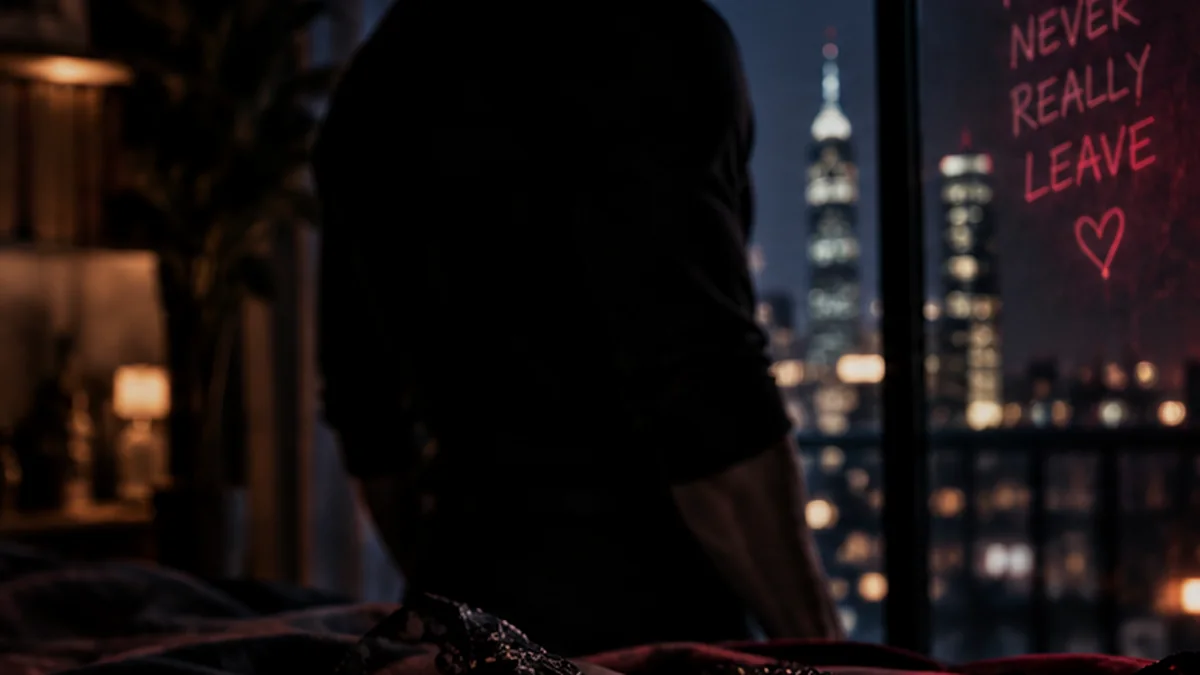
Lights Out succeeds at something dark romance often struggles with: it is genuinely playful without pretending its darker tropes are ordinary relationship behavior. Navessa Allen uses masked-man fantasy, stalking, privacy invasion, explicit attraction, and outside danger—but filters them through humor and a hero who is considerably more awkward than the aesthetic suggests.
That tonal choice is why the book feels fresh to many readers. It is also why some readers looking for relentless darkness come away underwhelmed.
Editorial verdict
Lights Out is stronger as a dark romantic comedy than as a psychological stalker romance. Its best weapon is tonal control. The book understands that fantasy can be dangerous and funny in the same scene, and it uses Josh’s personality to puncture the myth of the flawless masked predator.
The weakness is structural: once the novelty of the central premise is established, the external plot has to work harder to justify the book’s length. The villain and thriller escalation are functional, but they are less distinctive than Aly and Josh’s chemistry.
The masked-man fantasy is treated as fantasy
Aly’s interest in masked men is not hidden from the reader. That matters because the book is not building toward a revelation that she secretly likes danger. Her fantasy is already part of her self-knowledge.
Josh, meanwhile, has cultivated an online persona that turns anonymity and physical performance into attraction. The book’s hook comes from collapsing the distance between internet fantasy and real-life intrusion.
That setup gives the story a modern quality. The desire is mediated through online content, comments, performance, surveillance, and digital access. The mask is not only an object; it is part of a persona.
Josh works because he is not Zade 2.0
The smartest creative decision in Lights Out is refusing to make Josh a copy of the hyper-controlled, omnipotent dark-romance stalker. He can be threatening, but he can also be funny, embarrassed, impulsive, and human.
That makes the book less severe, but it also gives the relationship more elasticity. Humor creates room for the characters to feel like people instead of archetypes performing menace for hundreds of pages.
Readers who came specifically for a terrifying masked man may see this as dilution. Readers tired of interchangeable “morally gray” alpha heroes may see it as the book’s greatest advantage.
Aly has clearer erotic agency than many heroines in the subgenre
Aly’s fantasy life matters. She is not simply selected by a dangerous man and then written into attraction after the fact. The book makes her desires part of the premise.
That does not erase the stalking or privacy violations. Navessa Allen’s official content warnings explicitly include stalking, hidden cameras, hacking, home invasion, and invasion of privacy. But the narrative tension is different when the heroine’s interest in the fantasy is established independently.
This is one reason the book can feel “safer” emotionally even while containing objectively invasive behavior: the reader is given more access to Aly’s desire and participation in the fantasy.
The humor is both the book’s advantage and its risk
Dark comedy is hard because a joke can destroy tension if it arrives at the wrong moment. Lights Out usually understands when to let absurdity make the characters more appealing and when to let danger remain dangerous.
Still, humor changes the reading contract. A scene that would feel frightening in a severe stalker romance can become flirtatious or ridiculous here. That is a feature for some readers and a problem for others.
If you want a book that makes you feel unsafe, Lights Out may be too warm. If you want dark tropes without living in dread for 350 pages, the tonal balance is unusually effective.
The pacing is fast, sometimes too fast
The book’s readability is excellent. The premise moves quickly, chemistry develops early, and the story rarely pauses long enough to become heavy. That speed fits the voice.


But it can also compress emotional transitions. Because Aly and Josh are so entertaining together, the novel sometimes skips past opportunities to deepen consequences. Privacy invasion, stalking, and fear can turn into relationship material faster than a more psychological novel would allow.
This is where some negative reader reactions make sense. If you want development to feel slow and earned, the book’s velocity can read as convenience.
The external villain is useful but less interesting than the couple
The official premise introduces another person whose attention is more sinister than Josh’s “light stalking.” Structurally, this does two things: it turns Josh from predator into protector, and it gives the couple a threat they can face together.
It works. It also shifts the moral comparison in a familiar way. Once a worse man enters the story, Josh’s violations become easier to romanticize by contrast.
That device is common in dark romance because it lets the dangerous hero remain dangerous while still feeling like the safer option. It is effective, but it is not invisible.
What Lights Out does especially well
- Tone. The dark-comedy balance is distinctive.
- Character contrast. Josh’s masked persona and actual personality create humor and vulnerability.
- Heroine desire. Aly’s fantasy life exists before the relationship.
- Modernity. Online identity, comments, digital privacy, and persona all matter to the premise.
- Readability. The book moves quickly and knows when to entertain.
Where it is weaker
- The external thriller plot is less original than the romance.
- Fast pacing can flatten consequences.
- Humor reduces menace. This is only a flaw if you want a harsher book.
- Some development feels accelerated.
- The “worse villain” contrast makes the romantic lead easier to forgive in a predictable way.
How dark is Lights Out?
The tone is lighter than many famous stalker romances, but the content is still adult and potentially disturbing. The author’s official warnings include stalking, hidden cameras, hacking, home invasion, violence, death, and multiple explicit kink elements.
Do not confuse funny with mild.
Who should read it?
Readers who want masked-man fantasy, stalking themes, explicit romance, and humor. It is especially useful for people who are curious about dark romance but do not want every page to feel punishing.
Who should skip it?
Readers who dislike stalking or invasion-of-privacy fantasies, and readers who want their dark romance relentlessly serious. If you need psychological realism and slow emotional processing, the pacing may frustrate you.
Final judgment
Lights Out works because it knows its fantasy is a little ridiculous—and that confidence makes it more charming, not less dark. It is not the most psychologically complex dark romance, and the thriller mechanics are secondary to the couple. But its voice, humor, and masked-man premise give it an identity many darker books never develop.
For readers who want obsession with personality, this is an easy recommendation. For readers who equate darkness with severity, it may feel like the lights never go fully out.
Content note: dark romance can include coercion, violence, stalking, captivity, abuse, and other sensitive material. Always check the author’s current content warnings before reading.
Editorial note: this review evaluates the book’s published premise, official content information, series context, and recurring reader reactions. Dark-romance preferences are highly individual; content warnings matter more than hype.
Does the comedy weaken the stakes?
Sometimes. A joke can release pressure so efficiently that a threatening moment loses some aftertaste. The book usually uses that intentionally, but there are scenes where readers who want consequences to linger may feel the narrative moves on too quickly.
On the other hand, the comedy also prevents the characters from becoming self-parody. A masked stalker presented with complete solemnity for an entire novel can become absurd without the book realizing it. Lights Out is often stronger because it recognizes the absurdity and converts it into chemistry.
Josh as a fantasy of danger without total emotional opacity
Many dark-romance heroes are attractive partly because the heroine cannot fully access them. Josh is different. The reader sees enough awkwardness, insecurity, improvisation, and personality to understand the person under the mask.
That transparency changes the fantasy. The appeal is not only “dangerous stranger enters your private space.” It is also “the terrifying persona belongs to someone unexpectedly human.” For readers exhausted by emotionally identical alpha heroes, this distinction matters.
What the book could have done more deeply
The modern surveillance premise creates opportunities to explore the ethics of online performance, parasocial desire, and the collapse between fantasy comments and real-world consent. The book touches those ideas but prioritizes romance and entertainment over a sustained examination of them.
A more ambitious version might have spent longer on what it means to perform a dangerous fantasy for an audience and then bring it into private life. The existing novel is more interested in making that premise fun than philosophical, which is probably the correct commercial decision—but it leaves depth on the table.
What this means for your reading decision
The most useful review is not the one that tells every reader to buy or skip the same book. It identifies the book’s strongest creative choice, its weakest structural habit, and the type of reader for whom that tradeoff is worthwhile.
Dark romance is especially dependent on personal boundaries. A trope that creates tension for one reader can destroy the experience for another. Use criticism to understand the mechanism, then decide whether that mechanism matches what you want from fiction.