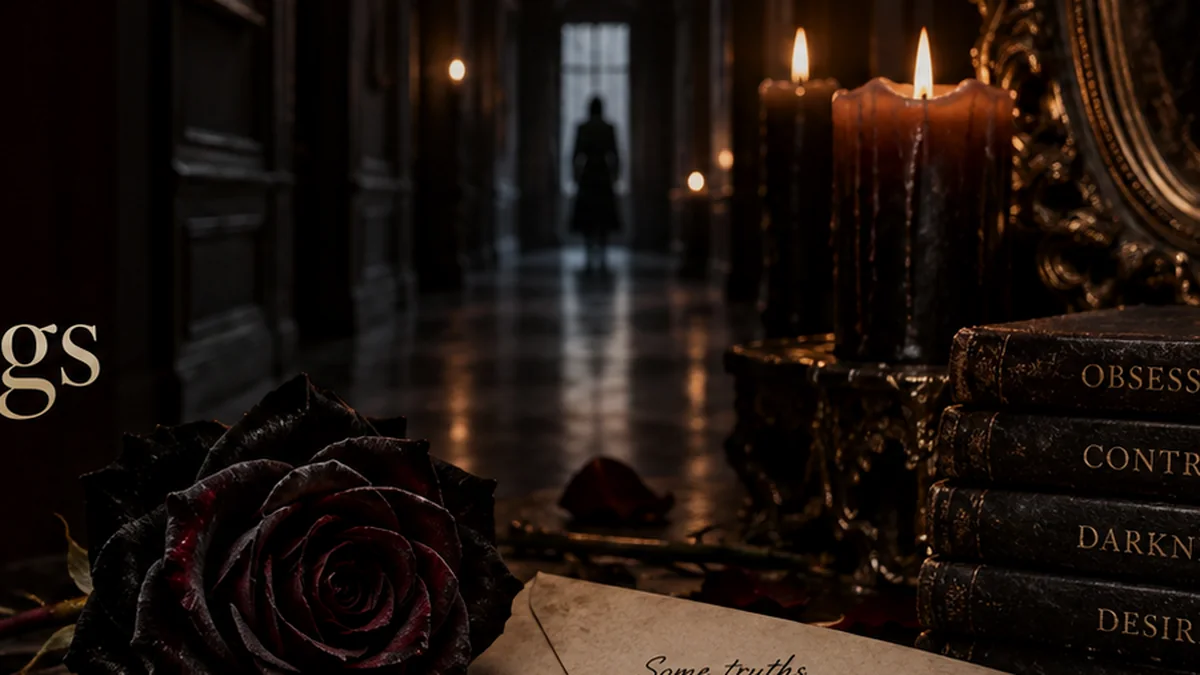
Who Is Adeline Reilly? Haunting Adeline Character Guide
Adeline Reilly is the writer and heroine of Haunting Adeline. Explore Parsons Manor, her relationship with Zade, the duet order, and content warnings.
Adeline Reilly is the writer and central female lead of H. D. Carlton’s Haunting Adeline. She inherits Parsons Manor, becomes absorbed in a disturbing family mystery, and finds herself pursued by Zade Meadows, a man whose obsessive attention violates her privacy and boundaries. She is not simply “Zade’s love interest.” The novel’s gothic mystery, first-person emotional conflict, and questions about fear and attraction depend on her perspective.
If you searched for “Adeline Reilly Haunting Adeline” or “who is Adeline in Haunting Adeline?”, the starting point is the first book of the Cat & Mouse Duet. Hunting Adeline continues her story. This spoiler-conscious guide explains what Adeline contributes to the novel, why readers disagree about her choices, and how to separate her role from the sensational claims that circulate in short BookTok edits.
Who is Adeline Reilly?
Adeline is a writer whose move into an inherited family home puts her at the intersection of two sources of tension. One comes from the house and the history of the people who lived there. The other comes from Zade, a stranger who watches her and makes himself impossible to ignore. Those pressures are not interchangeable: the family mystery invites investigation, while Zade’s attention makes personal space and consent central concerns.
Her occupation matters to the way the story frames her. Adeline observes, interprets, and tries to make sense of unsettling details; she is not merely a person waiting for a romantic lead to introduce the plot. She has an existing personal history, interests, and a relationship with the manor before the obsessive pursuit fully dominates the romance. Readers looking for a complete biography should distinguish the information presented in the novel from fan-created personality summaries or unverified ages and timelines.
What is Adeline’s relationship with Parsons Manor?
The inherited house functions as more than a dramatic location. It is the place where Adeline encounters family history, unresolved questions, and traces of an earlier generation. An old home is a recognizable gothic device: rooms, documents, memories, and uncertain knowledge make the past intrude on the present. For Adeline, that intrusion becomes something to examine rather than only something to fear.
This distinction helps readers understand why Haunting Adeline is not solely a book about a man following a woman. There is a separate mystery with its own emotional pull. Adeline’s curiosity creates narrative momentum even while her relationship with Zade generates increasingly troubling tension. The house is therefore both an inheritance and a reminder that the heroine had a story before the stalker noticed her.
Who is Zade Meadows to Adeline?
Zade is the obsessive male lead who pursues Adeline. Their relationship is marketed as stalker romance and villain-to-lovers territory. Carlton’s official content notes specifically warn about stalking and non/dub-con between the main characters. Describing him as a “protective boyfriend” without those qualifications would leave readers with the wrong impression about the fantasy being depicted.
Adeline’s response to Zade is intentionally conflicted. Fear, anger, fascination, and attraction do not fit into one uncomplicated romantic category. The book gets much of its tension from the gap between what she wants to control and how persistently Zade invades that control. When readers argue about whether the relationship is romantic or frightening, they are responding to a deliberate collision inside the premise. Our separate Zade Meadows guide focuses on his actions and role; this page stays with Adeline’s position inside that conflict.
Is Adeline a strong or passive heroine?
The better question is what meaningful decisions she makes under pressure. A character does not need equal physical power or perfect judgment to retain a point of view. Adeline investigates her family’s past, reacts to intrusion, and tries to interpret the danger around her. Those choices are important even when readers disagree with them or wish she would respond differently.
At the same time, “she is strong” should not become a blanket defense of every narrative outcome. A heroine can show curiosity and resistance while also facing serious coercion and violations of personal boundaries. Calling her weak because she experiences fear is simplistic; calling every frightening development empowering is equally misleading. The useful criticism asks which decisions belong to Adeline, which are constrained, and how those constraints shape the reading experience.
Why do readers disagree about Adeline’s choices?
Readers come to the novel with different expectations of what a dark-romance heroine should do. Some want a protagonist who actively challenges a frightening romantic interest, even when doing so cannot guarantee safety. Others expect clearer self-protection, more consistent boundaries, or a relationship where attraction is not intertwined with intimidation. Neither expectation changes the book’s basic genre promise: the danger is deliberately located within the central romance as well as outside it.
Short character edits often remove the uncertainty that gives Adeline’s decisions their context. A clip may present a line as evidence that she welcomes everything Zade does or that she rejects him completely. The longer narrative is less tidy. When evaluating her behavior, account for what she knows at that moment, what she fears, and what information remains hidden. A reaction to a complicated fictional heroine is not a substitute for describing her accurately.
How is Adeline different from a typical gothic heroine?
Her story uses familiar gothic elements: an old family residence, traces of previous generations, a sense of being watched, and the tension between curiosity and fear. In classic gothic fiction, the house often embodies uncertainty about lineage and the past. In Haunting Adeline, that atmosphere exists alongside a distinctly modern form of danger: intrusive surveillance and an obsessive romantic lead.
This combination changes the stakes. Adeline’s investigation into the manor promises knowledge; Zade’s scrutiny threatens control over information about herself. Both story lines involve who can observe and who gets to decide what remains private, but their moral meanings differ. The house may reward curiosity; a stalker’s refusal to respect boundaries is not simply another harmless clue. That contrast is part of what makes Adeline’s viewpoint crucial to the novel’s tone.
Does Adeline know what Zade is doing?
The spoiler-light answer is that surveillance, pursuit, and their consequences are central to the plot. Precise moment-by-moment answers depend on where you are in the novel and what each character has learned. A complete chronology would reveal developments better discovered while reading. Readers searching for “does Adeline know about Zade?” are usually asking whether the dynamic is entirely secret or explicitly confronted; the book uses uncertainty and shifting awareness to create tension.


It is more reliable to describe the relationship’s overall structure than to invent a chapter number or an exact sequence from memory. If you want the premise before reading, the publisher and author’s descriptions are enough. If you want a comprehensive plot recap, that is a separate spoiler-heavy intent and should not be quietly inserted into a character introduction.
What role does the family mystery play in Adeline’s character arc?
The family-history plot creates a second question about power: how much can Adeline learn about people who came before her, and how should that knowledge influence what she believes now? The setting rewards her willingness to pay attention. It also gives her moments where the story is not simply a tug-of-war with Zade; she is uncovering a legacy of secrets.
This distinction protects the heroine from being reduced to an accessory. Discussions of morally gray romantic leads can become so focused on whether the man is sympathetic that the heroine’s own interests disappear. Adeline’s engagement with the manor is a concrete reason to examine her character independently. A useful guide should preserve that context rather than replacing it with a list of one-line traits gathered from fan accounts.
Who else matters in Adeline’s story?
Zade is central to the romantic conflict, but other figures help develop the house mystery, the criminal stakes, and the author’s broader fictional setting. Sibby, for example, is linked to the connected novella Satan’s Affair, rather than being another romantic lead in Adeline’s duet. Keeping these relationships straight stops character pages from drifting into inaccurate family trees or treating every recognizable name as equally prominent.
For a spoiler-conscious map of the cast, read our Haunting Adeline characters guide. If you saw a particular name in an edit and are trying to identify its source book, the Sibby character guide explains why a related novella is often mentioned alongside the central novels. Neither page needs to duplicate Adeline’s character analysis.
Is Adeline’s relationship with Zade consensual?
Readers should not rely on a one-word label to decide whether the book fits their limits. Carlton’s official warnings expressly identify non/dub-con between the main characters and stalking. That is an important factual boundary. A popular romantic dynamic, or Adeline’s attraction, does not automatically remove the coercive circumstances described by the author.
Dark romance is fiction for adults who may choose to explore unsettling fantasies. Discussing that appeal does not require pretending that the central relationship models healthy behavior outside the page. Readers who prefer unambiguous, ongoing consent between romantic leads should consider a different book. Our Haunting Adeline warnings guide organizes the categories of concern without turning them into a moral test for readers.
How does Hunting Adeline change Adeline’s story?
Hunting Adeline is the second and final novel of the duet, not an unrelated book featuring a different heroine. The author’s official description and warning information signal a considerable shift toward survival, trauma, and recovery amid extreme external violence. It is much heavier in several categories than the first novel, including graphic sexual assault, kidnapping, torture, and severe psychological consequences.
That shift matters to readers looking up Adeline because her character cannot be assessed entirely from Zade’s opening fascination with her. The second book continues her arc under radically different circumstances. This article will not describe the late plot turns or her final decisions, but it would be misleading to present Hunting Adeline as merely a repeat of the first book’s stalking premise. Verify the sequel’s warnings separately before continuing.
What should you read first?
Begin with Haunting Adeline to understand Adeline’s house, voice, and developing relationship with Zade. Continue with Hunting Adeline for the central story’s direct continuation. Satan’s Affair is a separate, connected novella that may add world context, but it is not required to begin the two-book romance. Carlton’s catalog distinguishes the duet from adjacent titles.
If a site labels all connected work as one “four-book series,” check whether it means a broader reading universe rather than a four-volume story about one couple. A reader who wants Adeline’s story specifically should not be forced through every spinoff before book one. Our Haunting Adeline reading-order page handles the broader bibliography question.
Is Haunting Adeline suitable for someone new to dark romance?
That depends less on popularity and more on your content boundaries. The book includes a central stalker relationship with explicit warnings for non/dub-con, graphic violence, and trafficking-related themes. A reader who enjoys suspense but wants the romantic interest to be a safe refuge may find the premise much more disturbing than expected. A reader deliberately seeking transgressive adult fiction may value the same tension.
Before making a reading choice, consider whether the danger is inside the romance or mainly outside it. For Adeline, the two are intertwined. If you want a lower-intensity entry point, you can explore the broader genre through our dark-romance introduction rather than treating a heavily marketed title as an automatic starting recommendation.
Frequently asked questions
What book is Adeline Reilly from?
Adeline Reilly is the central female character in H. D. Carlton’s Haunting Adeline and its direct sequel, Hunting Adeline, which together form the Cat & Mouse Duet.
Is Adeline Reilly the same person as Sibby?
No. Adeline and Sibby are different characters. Sibby is associated with the connected Satan’s Affair material, while Adeline is the writer at the heart of the duet’s gothic mystery and central romance.
Is Adeline Reilly Zade Meadows’s love interest?
Yes, she is the central romantic counterpart to Zade in the duet. But the relationship is intentionally transgressive, and Carlton’s official warnings should be read before assuming it fits ordinary romantic expectations.
Do I need Satan’s Affair to understand Adeline?
No. The novella adds connections to the author’s fictional world, but the main two-book narrative begins with Haunting Adeline. Readers interested in the related story can explore it separately.
Does Adeline have her own storyline outside Zade?
Yes. The Parsons Manor family-history mystery and Adeline’s investigation give her narrative stakes beyond the stalking relationship. Those elements also help establish the novel’s gothic atmosphere.
Bottom line: Adeline Reilly explained
Adeline Reilly is a writer, the heroine of Haunting Adeline, and the perspective through which its gothic family mystery and dangerous stalker romance collide. She is not interchangeable with Zade, Sibby, or the wider supporting cast. Readers may disagree about her decisions, but understanding her requires following both her investigative curiosity and the pressures placed on her autonomy.
If you are choosing whether to read the books, begin with the first duet novel, review the official content warnings, and approach the sequel as a direct continuation with substantially heavier material. This character guide stays spoiler-conscious and does not invent ages, chapter numbers, or late-story scenes.
Sources and editorial basis
The bibliographic and warning information comes from H. D. Carlton’s official library, Cat & Mouse books page, and Haunting Adeline paperback listing. The discussion of gothic conventions, character agency, and reader responses is editorial interpretation rather than a claim that the author supplied those analyses verbatim.