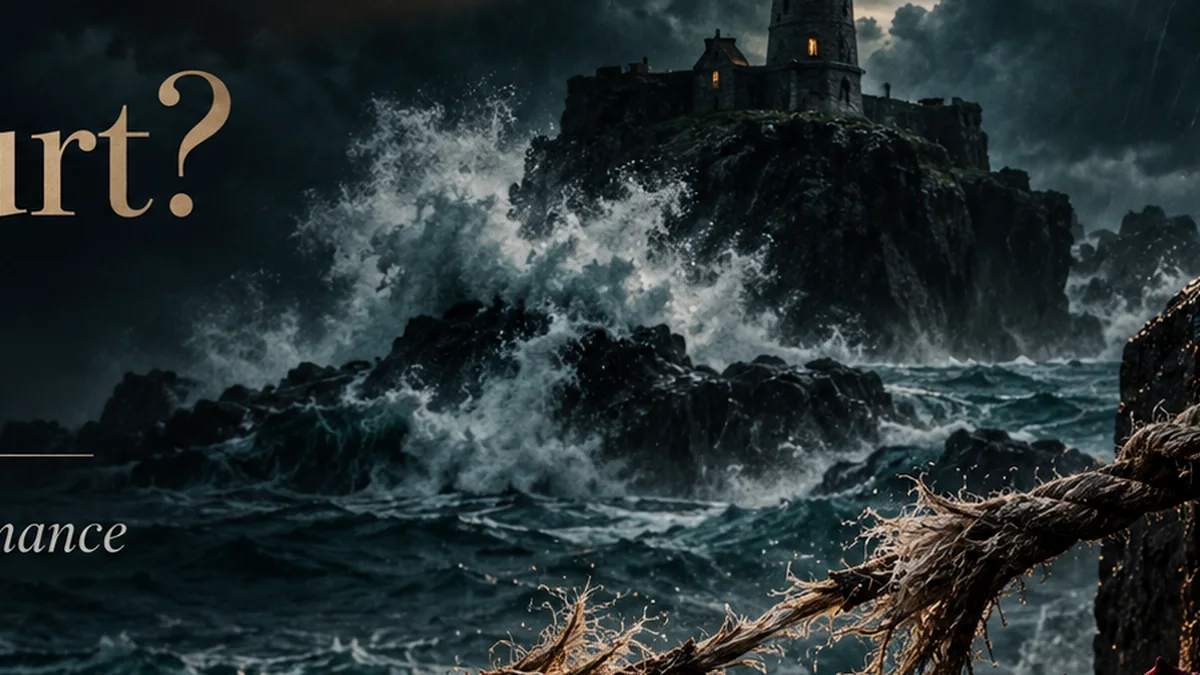
Does It Hurt? Characters: Sawyer, Enzo & the Lighthouse Threat Explained
Does It Hurt? characters explained: Sawyer, Enzo Vitale, the lighthouse caretaker, the revenge setup, and how the survival plot changes their power dynamic.
The central characters in H.D. Carlton’s Does It Hurt? are Sawyer and Enzo Vitale, and the book becomes much easier to understand once you see how identity and survival shape both of them. The author’s official description presents Sawyer as a woman living through stolen identities and Enzo as a man drawn to the deep sea and its predators. Their encounter becomes revenge, a boat journey, a storm, a shipwreck, and finally a dangerous lighthouse refuge.
If you searched for Does It Hurt characters, this guide focuses on function rather than a giant cast list. Sawyer, Enzo, and the lighthouse caretaker matter because each controls a different kind of information, safety, and threat.
Sawyer: the heroine built around unstable identity
Sawyer’s starting point is instability. The official premise describes her as living under identities that are not fully her own. That makes secrecy part of her survival long before the romance begins. She is not merely “mysterious” for aesthetic reasons; withholding information is tied to how she has learned to move through the world.
That matters when she meets Enzo because attraction develops alongside deception. Readers who dislike heroines who lie or conceal important facts should understand that the behavior is not a late twist pasted onto the relationship. It is part of Sawyer’s core characterization.
Enzo Vitale: danger linked to the sea
Enzo is closely associated with the ocean and predators. The author’s description makes his fascination with the deep sea part of his identity, not just scenery. He is dangerous, angry, and capable of turning betrayal into a revenge plan that places Sawyer in his environment rather than hers.
The appeal is the collision between expertise and volatility. On the water, Enzo understands systems Sawyer does not. That gives him practical power before the shipwreck creates a situation in which both of them lose control.
Why Sawyer and Enzo begin as adversaries
The relationship is not built from a neutral meet-cute. Sawyer uses something that belongs to Enzo—his identity/name in the official premise—and he responds by luring her onto his boat with revenge in mind. Attraction therefore exists beside anger and retaliation.
For reader fit, this is essential. The book is not asking whether a kind stranger can help a vulnerable woman. It is asking what happens when two people with reasons not to trust each other become physically dependent on the same survival situation.
The storm changes the power structure
Before the storm, Enzo has environmental advantage: the boat and sea are his territory. After the shipwreck, the relationship changes because neither character controls the island or lighthouse. Physical survival competes with their private conflict.
This is where Does It Hurt? stops behaving like a straightforward revenge romance and moves toward gothic survival suspense. Sawyer and Enzo still have to negotiate each other, but the setting introduces threats neither created.
The lighthouse caretaker
The official description warns that the old lighthouse caretaker may be more sinister than the refuge first appears. Spoiler-free, his function is to destabilize the simple “hero versus heroine” dynamic. Sawyer and Enzo can hate or distrust each other and still recognize that an external person may represent a different kind of danger.
That role is important because it forces comparison. A dark romance can contain a threatening male lead without making every threat morally equivalent. The caretaker’s presence helps the story distinguish romantic hostility from a survival threat that neither protagonist fully controls.
Is Sawyer a passive heroine?
No. Her secrecy may create problems, but it also shows that she has survived by adapting. Once stranded, competence is measured by choices rather than social power. She has to read people, manage fear, and decide when cooperation is safer than resistance.


A useful character guide should not confuse vulnerability with passivity. Sawyer is vulnerable because the situation is extreme and because Enzo knows things she does not. She still has agency when her decisions alter what happens next.
Is Enzo only a revenge hero?
Revenge launches the conflict, but it is not enough to sustain a novel. Enzo becomes more interesting when his certainty breaks down. The storm removes his control, the island changes what competence means, and Sawyer becomes more than the person he intended to punish.
Readers who like antiheroes often look for exactly this transition: danger should remain credible while emotional information complicates the original motive. If the hero becomes harmless too quickly, the dark premise collapses; if he never changes at all, the romance cannot deepen.
Identity is the hidden third force
Much of the book’s tension can be read through identity. Sawyer’s names and secrets determine what others know about her. Enzo’s sense of self is linked to expertise, revenge, and predatory imagery. The lighthouse then strips both characters of the social structures they normally use to define themselves.
That is why the survival setting matters to character development. Isolation reduces their ability to perform for the outside world. What remains is what they do when information, food, shelter, and trust have immediate consequences.
Character tone: romance, thriller, and gothic horror
The current publisher metadata places Does It Hurt? across romantic suspense, romance, and gothic/horror territory. That hybrid matters because character expectations change with genre. Enzo is not only a romance hero; he also has to function inside suspense. Sawyer is not only a love interest; she is the viewpoint through which survival and uncertainty become personal.
If you want a conventional contemporary cast with friends, work, and social scenes carrying equal weight, the isolation-heavy structure may feel narrow. If you want two leads compressed by danger until every decision becomes intimate, that narrowness is part of the appeal.
Content boundaries around the characters
H.D. Carlton’s library lists strong content warnings for the novel, including graphic sexual situations, graphic violence/gore, abuse-related references, near-death circumstances, ocean stranding, and suicidal ideation. Those warnings are relevant to the cast because extreme events are not only happening around Sawyer and Enzo; they influence how they behave toward each other.
Use the author’s current warning list if any category is a hard limit. A character guide can explain motivation, but it should not replace an edition-level content check.
Related guides
For a broader verdict, see our Does It Hurt? review. For content boundaries, use Does It Hurt? trigger warnings. For the plot without a full ending recap, use the Does It Hurt? summary.
Bottom line
Sawyer and Enzo are designed to be difficult to trust. Her unstable identity and his revenge-driven control create the initial conflict; the storm and lighthouse then force both of them into a different hierarchy of survival. The caretaker matters because he introduces danger that is not part of their private game. Understanding those three roles gives you the clearest map of the novel without spoiling every turn.
Sources and editorial basis
This update uses H.D. Carlton’s official product/library descriptions and current publisher metadata. Edition-specific details can change, so content warnings should always be checked against the version you plan to read.
How to use this guide before reading
A search for does it hurt characters is usually a decision query rather than trivia. Use the distinctions above to decide what you need to verify in the exact edition, which elements are confirmed by official copy, and which questions still require an author content note. That approach is more useful than turning Does It Hurt? Characters: Sawyer, Enzo & the Lighthouse Threat Explained into a generic list of labels.
Edition and context check
Book metadata, warning language, bonus material, and retailer descriptions can change across editions. Before treating any scene-level claim as permanent, check the ISBN or format you plan to read. This guide deliberately keeps edition-sensitive claims conservative so the owner URL remains useful after a paperback, ebook, or audiobook update.
Reader-fit questions
Ask three things before starting: what part of the premise attracts you, what material would make you stop, and whether you prefer danger inside or outside the central relationship. Those questions turn does it hurt characters from a search-engine phrase into a practical reading decision and prevent popularity from being mistaken for compatibility.
Why context beats a rating
A single darkness or spice score compresses too much information. Frequency, explicitness, coercion, violence, humor, trauma, and emotional aftermath can move independently. The most reliable comparison is therefore mechanism to mechanism: compare what a scene is doing to trust, power, and agency rather than only how shocking it appears in isolation.